Feel like everyone’s making passive income online but you’re stuck figuring out where to even begin? Affiliate marketing and dropshipping are two of the most hyped-up ways to break in; honestly, they sound so similar at first, it’s enough to make anyone’s head spin. If your days are anything like mine (chaotic, unpredictable, and fueled by reheated coffee), getting the basics straight is half the battle. So, here’s what you need to really know about affiliate marketing vs. dropshipping—without the fluff, the jargon, or the guru promises.
Affiliate Marketing and Dropshipping: Quick Breakdown
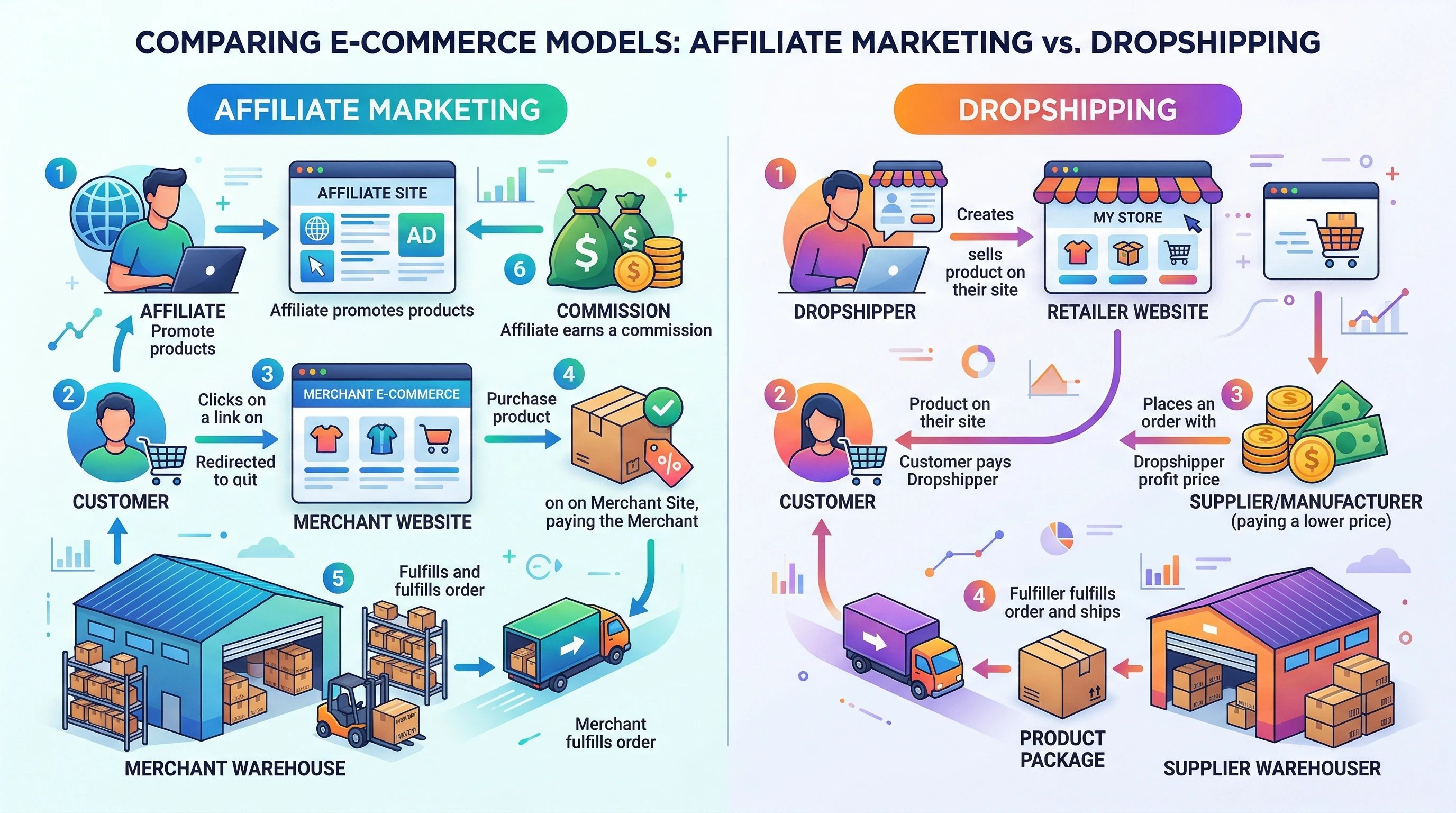
Affiliate marketing and dropshipping both let you make money online without ever stocking inventory in your hallway closet, but that’s pretty much where the similarities end. Affiliate marketing is about recommending products and earning a slice of the sale. Dropshipping, on the other hand, is more like running your own little online shop, except the supplier ships products straight to your customers, so you never touch the stuff.
Both can be done from anywhere, in your pajamas or while bouncing a toddler on your hip, but the workload and risk level are honestly quite different. In both cases, the promise of flexibility is real, but the nitty-gritty of each method can make a real difference in how your days play out.
How Affiliate Marketing Really Works
Affiliate marketing is basically getting paid to spread the word. You partner with a company (like Amazon, Target, or a zillion smaller brands) and promote their stuff using a special tracking link. When someone buys after clicking your link, you get a commission. You don’t handle shipping, complaints, or inventory—even the returns are not your problem.
- Commission based: You earn a percentage of each referred sale, sometimes a flat fee, sometimes a cut.
- No customer service headaches: The company handles all the post-sale chaos.
- Your job? Get eyeballs on your link by sharing it through your blog, social media, YouTube channel, or email list.
If you want a step-by-step guide minus the runaround, I found this affiliate marketing beginner guide pretty handy when I was stumbling through at first. Sometimes, just seeing a roadmap is all you need to get motivated and avoid rookie mistakes.
What Dropshipping Involves (Minus the Filtered Hype)
Runs kind of like a regular ecommerce store, but you’re not slapping address labels onto packages. When a customer buys from your website, you place that same order with your supplier, who ships directly to your customer. You pocket the difference between what your customer paid and what you paid the supplier.
- Your Shopify store (or whatever platform you use) is your brand front.
- You choose price markup and manage inventory listings.
- Customer service is officially your problem: if something’s lost, delayed, or defective, buckle up.
Dropshipping promises flexibility, and you don’t need thousands upfront for stock. Still, running a store means answering emails at weird hours, and you’ll often find yourself managing customer questions and troubleshooting problems you never expected.
Key Differences: Affiliate Marketing vs. Dropshipping
Still trying to decide which headache, uh, I mean, opportunity sounds less stressful? Here’s where they split:
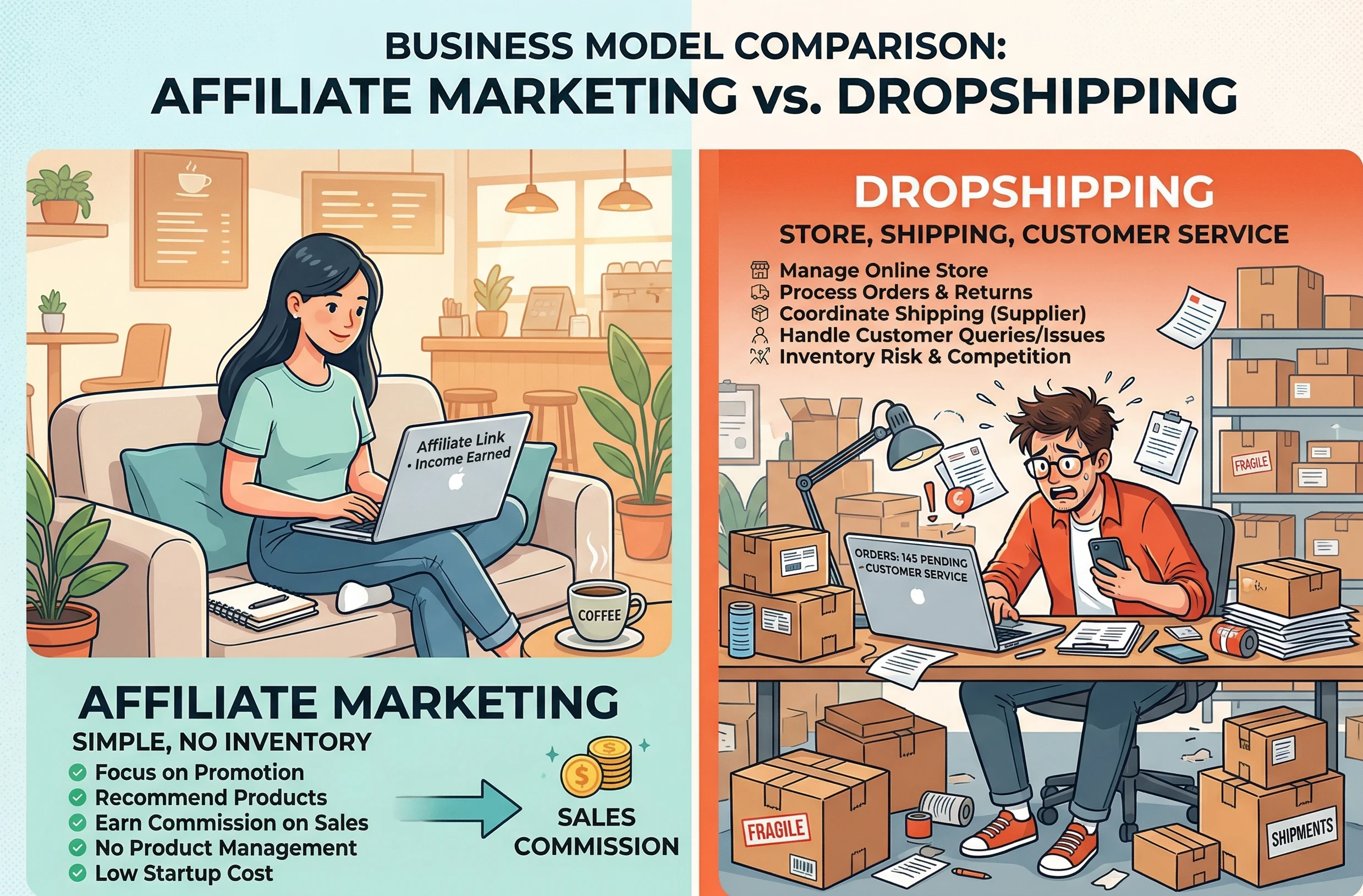
- Ownership: Affiliate marketing means you’re an in between. Dropshipping is running your own shop; you own the customer experience, good or bad.
- Earnings: Affiliate marketing pays commissions per sale. With dropshipping, you keep the price markup—sometimes that means bigger profit, sometimes not.
- Time commitment: Affiliate marketing lets you work more flexibly. Dropshipping can turn into a part-time job fast, especially when (not if) orders go sideways.
- Startup costs: Affiliates only need a website or social profile. Dropshipping usually needs a store platform like Shopify and some cash for apps and ads.
These differences often help people pick a path depending on their tolerance for chaos and how much control they want over the business. If you want pure promotion with fewer moving parts, affiliate marketing is a great first step. Dropshipping can be a thrill if you love the idea of building a brand and running your own store, but it comes with the whole package—good and bad.
The Good and the Not-So-Good (With Real-Life Examples)
Why Affiliate Marketing Might Work For You
I’m a fan of affiliate marketing for people who cringe at the idea of dealing with supplier mixups. Here’s what’s appealing:
- Low startup hassle: You can start with just a blog or social account.
- No angry customer emails: If an order’s late, it’s not your circus.
- No shipping math to mess up: You’re purely promoting.
I’ve seen folks turn a food blog or a YouTube channel about cleaning hacks into decent side cash just by recommending what they already love. If you’re curious how affiliate marketing works at a super detailed level, this beginner-friendly explainer covers the nitty-gritty. Affiliate marketing isn’t instant money, but if you’re consistent and pick products that genuinely help people, it can pay off over time. Plus, you can track down new products to promote without ever talking to a supplier.
What to Watch Out For
- Low commissions for big brands (Amazon’s famous for its tiny cut).
- You’re at the mercy of platforms: if they drop you, that link’s dead overnight.
- Payments often delayed (think 30–60 days after the sale).
Keep in mind, affiliate links can sometimes fall out of favor, or companies may change commission rates without warning. That’s why it’s smart to mix in some variety and not rely on just one program for your income.
Where Dropshipping Shines (and Where It Fails)
If you geek out over building a store from scratch and love control, dropshipping might hit the spot. You can choose your niche, pick branding, and make your store as “you” as possible. There’s a nice feeling in seeing your own shop live, with customers coming to you for repeat business.
- Bigger margins possible if you find the right suppliers.
- Total control over product selection and presentation.
- The brand is all yours: repeat customers come back to you.
The flip side?
- Customer gripes about shipping speed or quality land in your inbox. A lot.
- Supplier errors are your emergency, every single time.
- Return and refund chaos is real. Prepare your patience.
Dropshipping can bring exciting wins—like that first sale alert or five-star review—but it’s not a “set and forget” ride. It helps to have great suppliers, clear return policies, and quick communications skills to keep things rolling smoothly.
Getting Started: What Beginners Mess Up Most
- Going too broad: Whether it’s affiliate or dropshipping, narrowing your niche is super important. If your target customer is “everyone,” you’ll reach no one.
- Thinking “passive” means “hands off”: Both models take real effort, especially at first. Automation comes later, maybe.
- Ignoring the importance of traffic: If you don’t bring people to your links or store, nothing happens. SEO and marketing aren’t optional.
- Chasing trends instead of solving real problems: Yes, “hot products” can sell, but solving real pain points creates lasting cash flow.
Another mistake is underestimating content creation. Whether you write, film, or post photos, giving value first is key. A quick product link won’t do much unless it’s actually helpful to someone.
Debunking a Big Misconception
Everyone seems to think both affiliate marketing and dropshipping are practically “set and forget.” Here’s the reality: both need consistent effort. Traffic doesn’t appear out of nowhere, and competition is everywhere. But if you like experimenting, learning, and tweaking strategy, either one is achievable. Success happens over time, not overnight, so expect to build and tweak as you go.
Which One Suits Busy, Real-Life Schedules?
If you’ve got an unpredictable life (kids, job, pets, maybe all the above), affiliate marketing really is easier to fit around the madness—especially early on. You can craft a blog post during nap time, or batch schedule social posts while watching Bluey. With dropshipping, be prepared for late-night customer emails and supply chain mini-dramas. Worth it for some, but if you’re after minimal chaos, affiliate wins points for “least likely to ruin your weekend.”
Curious about dipping a toe in affiliate marketing first? I found Wealthy Affiliate pretty helpful for newbie-friendly tips and community support. No pressure, but it’s a good place to poke around if you need extra help. There are also Facebook groups and YouTube channels dedicated to answering questions—sometimes, joining a community can give you just the spark or confidence you need.

Frequently Asked Questions
Overwhelmed? Yeah, I hear you. Here are answers to the questions I wish I had at the start.
Q: Can I do both affiliate marketing and dropshipping at the same time?
Sure, many people do! You might promote affiliate products on your blog while also running your own dropshipping shop. Just know your time and energy limits. Time management is key if you decide to juggle both.
Q: Which is better for beginners?
Most beginners find affiliate marketing less stressful; no customer service and lower risk. But if you love building a brand and don’t mind support emails, dropshipping can be more profitable—just expect a steeper learning curve.
Q: How much do I need to get started?
Affiliate marketing can cost next to nothing if you already have a blog or social account. Dropshipping usually takes $50–$200 or more to start with website hosting, a store platform, and maybe a few test ads.
Q: Are there legit ways to learn affiliate marketing for free?
Absolutely. Tons of free guides and YouTube tutorials are out there. Check out this free affiliate marketing beginner guide for an honest, step-by-step approach. Connecting with others and reading real stories can help you avoid common pitfalls.
Q: How long does it take to see results?
Affiliate marketing can take a few months to gain traction, especially if you’re relying on free traffic. Dropshipping sometimes brings in sales quickly, assuming you can drive paid traffic and troubleshoot fast. Both need patience and trial-and-error.
Final Thoughts: Which One Should You Pick?
Not all online business models vibe with every lifestyle, and that’s totally fine. If you’re strapped for time, allergic to customer emails, or just want a simple start, affiliate marketing is honestly the easier entry point. Want more control, bigger profit potential, and don’t mind a little chaos? Dropshipping could work, but brace yourself for a faster pace and more moving parts. Either way, careful research helps you make smarter moves and avoid rookie pitfalls.
If you’re itching to learn more about affiliate marketing or dropshipping, check out trusted resources like Shopify’s intro guide to dropshipping. No matter what you choose, small steps, real talk, and honest effort go a long way; promise.